Mostrando entradas con la etiqueta US Air Force. Mostrar todas las entradas

sábado, 27 de julio de 2019

Royal Australian Air Force and US Air Force technicians on the tools together

Australia Headquarters Air Command SO3 Military Public Affairs

For the first time, No. 36 Squadron (36SQN) has worked to get United States Air Force (USAF) C-17A Globemasters back into the air under a new cross-servicing arrangement. (Courtesy photo)

Australia —
For the first time, No. 36 Squadron (36SQN) has worked to get United States Air Force (USAF) C-17A Globemasters back into the air under a new cross-servicing arrangement.
 
Technicians from 36SQN were able to assist the crews of two USAF C-17As on separate tasks in Australia.
 
The work came following both countries agreeing to a C-17A Aircraft Repair and Maintenance Service - Implementing Arrangement (ARMS-IA), which allows RAAF and USAF technicians to work on each other’s C-17As.
 
On 4 July , ARMS-IA was enacted to help support a USAF C-17A at RAAF Base Richmond.
 
Warrant Officer (WOFF) Pete Ranson, Warrant Officer Engineering at 36SQN, said the request for assistance came via the Boeing Defence Australia representatives at RAAF Base Amberley.
 
“We supplied a co-pilot Multi-Function Control Panel for the cockpit, fitted it and carried out the associated operational checks to verify the replacement,” WOFF Ranson said.
 
“After that rectification, another unserviceability appeared, and was successfully rectified.”
 
This issue related to a Secondary Flight Control Computer, and saw 36SQN engage fellow RAAF technicians at 37SQN for tooling and consumables.
 
Throughout the repair on the USAF C-17A, RAAF and USAF technicians worked side-by-side.
 
“The issues with the affected aircraft were outside the expertise of the USAF maintenance personnel on that task,” WOFF Ranson said.
 
“The USAF aviation technician trades are more specialised than the RAAF, where we stream to either Aircraft Technician or Avionics Technician.”
 
“We carry a broader experience in a range of tasks, and 36SQN maintenance personnel were able to guide the USAF counterparts in rectifying the jet.”
 
The fix at RAAF Base Richmond came just days after 36SQN technicians assisted another USAF C-17A with a suspected fuel leak fault at Rockhampton.
 
“On that occasion, we sent maintenance personnel to troubleshoot the problem,” WOFF Ranson said.
 
“We found it was a faulty valve and not a fuel leak from the tank, which gave confidence to the USAF crew that they could carry on to an appropriate location to replace the valve.”
 
Group Captain (GPCAPT) Steve Pesce, Officer Commanding No. 86 Wing, said the work of 36SQN technicians had immediately validated the ARMS-IA.
 
“The ARMS-IA recognised the close relationship between RAAF and USAF C-17A communities, and the reality that we operate this aircraft a long way from home,” GPCAPT Pesce said.
 
“Both of these examples witnessed a C-17A getting back on a task much sooner than would have been otherwise possible, which is invaluable support.”
 
“I am very proud of the 36SQN team for the assistance it’s rendered to its USAF counterparts.”
 

This article is courtesy of Australia Headquarters Air Command SO3 Military Public Affairs)

jueves, 23 de mayo de 2019

U.S. Air Force's Space Fence Detects Debris From India Anti-Satellite Test

New radar system plays vital role as space becomes more congested and contested with satellites and orbital debris

KWAJALEIN ATOLL, Marshall IslandsMay 22, 2019 /PRNewswire/ -- The U.S. Air Force Space Fence system detected the breakup field from an anti-satellite test conducted by India during a scheduled endurance exercise of the new space surveillance radar.
As MICROSAT-R was expected to pass through the un-cued surveillance fence, Space Fence automatically issued a "breakup alert" indicating there were multiple objects within close proximity. Space Fence observed a significant amount of debris tracks surrounding the time of the event crossing labeled as uncorrelated targets. Long-arc tracking was initiated within the orbital debris cloud to form accurate initial orbit determinations. With this information, the system was able to automatically predict and correlate the next crossing time.
Lockheed Martin (NYSE: LMT) system operators then prepared for the next crossing by setting up an enhanced sensitivity task volume ahead of the normal un-cued surveillance fence to increase the low altitude track duration. Although the Space Fence is currently in its test phase and not yet operational, the Space Fence un-cued surveillance coverage showed its unique ability to observe these events unfolding at different altitudes in real time. Although the anti-satellite test was conducted at approximately 300 kilometers, the debris cloud extended beyond the original parent object orbit.   
"Although the Space Fence system is still under test, it continues to demonstrate its advanced capabilities providing operationally-relevant information in all orbital regimes from Low Earth Orbit through Geosynchronous Earth Orbit," said Dr. Rob Smith, vice president and general manager of Radar and Sensor Systems for Lockheed Martin. "The criticality of space assets to both national defense and the world economy cannot be understated. As multiple new mega constellations consisting of thousands of satellites become a reality and the space domain continues to become more congested, the demand for more accurate and timely space situational awareness data will be of the utmost importance to the warfighter."
The Space Fence system continues to track objects from the anti-satellite event through the government-led testing phase which began in early April.
Colonel Stephen Purdy, Director of the Space Superiority Systems Directorate, Space and Missile Systems Center, Los Angeles Air Force Base, who oversees the Space Fence program said, "Space Fence is already proving itself as a capable system even before becoming operational. The Indian test showcased Space Fence's capabilities in a real-world event. The system was able to quickly respond to a highly dynamic situation providing critical data. Space Fence is the latest in a long line of capabilities we are collectively bringing to the warfighter as we continue to build out space capabilities for the United States."

lunes, 20 de mayo de 2019

Preparing for the OmegA Rocket: How to do a Static Test

By Kendra Kastelan

Tucked into the hillside off a quiet Utah highway, bunker-like buildings go relatively unnoticed among the brush. Deep inside one of these shed-like structures rests the work of dozens of the country’s best rocket scientists. Soon, years of development and dedication will culminate in a ten-second countdown and a smoke plume, but following this qualification test the opportunities are vast. 

Recently, a team of technicians in Promontory, Utah, artfully manipulated the first stage of Northrop Grumman’s OmegA rocket into its final configuration using multiple cranes and other large tooling. After assembly, the 12-foot-diameter and 80-foot-long stage rests on supports, wiring spilling from its forward end and leading to data collection points carefully located based on precise measurements.
Northrop Grumman is building OmegA to launch intermediate to heavy national security payloads for the U.S. Air Force, as well as science and commercial payloads for other customers. Solid rocket motors with lightweight composite cases power the first and second stages. In a few weeks, the company will perform its first full-scale static test of the first stage, the bottom and most powerful portion of the rocket’s propulsion.
When talking to Scott Lehr, vice president and general manager of Northrop Grumman’s flight systems division, it is immediately clear he is proud of the work going on at Promontory. “This first stage ground test is a major milestone. Three and a half years ago we said we would accomplish this test in the spring of 2019, and that is exactly what we are going to do. In the National Security market, schedule is everything,” he said.
In the remaining days leading up to the static test, currently scheduled for May 30, 2019, technicians will finish attaching instrumentation gauges and data recorders that will measure key characteristics such as thrust, vibration and burn rate. Then they will practice conducting the test, running through and repeating each step of the countdown multiple times. Performing these simulations ensures the team members have all the test systems calibrated and functioning properly.
“Every countdown step is critical and has to be performed with perfection,” says Jamie Barney, director of test and research operations, propulsion systems, Northrop Grumman. “We have an extremely experienced team, but no one here is ever complacent about a rocket test.”
On test day, the entire test bay will roll back to expose the first stage motor attached to three “spacer” segments totaling 177 feet of white casing. When the countdown clock reaches zero, the igniter, housed in the forward segment, will rapidly ignite and pressurize the entire motor.
The motor will continue to burn for approximately two minutes, producing more than two million pounds of thrust channeled through a vectorable nozzle. During the test, 30 to 40 technicians and engineers will line the control room, closely monitoring the sensors, instrumentation, and cameras on and around the motor. They will collect approximately 700 data channels, gauging everything from case growth to component stresses to motor pressure to temperatures – all essential data to qualify this motor for flight.
“The first stage rocket motor is the heart of the OmegA vehicle,” says Paul Messer, OmegA first and second stage motor program manager, Northrop Grumman. “With the critical data from the static fire test, and the post-test inspections, we can qualify our products and ensure their reliability to our customers.”
For about six months after the test, the team will assess the data and disassemble, evaluate and dissect the hardware to observe the effects of motor operation. A post-assessment verdict of reliability across all systems will qualify the motor for flight.
“Successfully completing the full-scale static test later this month will be a significant milestone,” says Kevin Wilder, OmegA deputy program director, Northrop Grumman. “Everyone on the team is personally invested in this program, and we are all looking forward to OmegA’s first launch in 2021.”

sábado, 18 de mayo de 2019

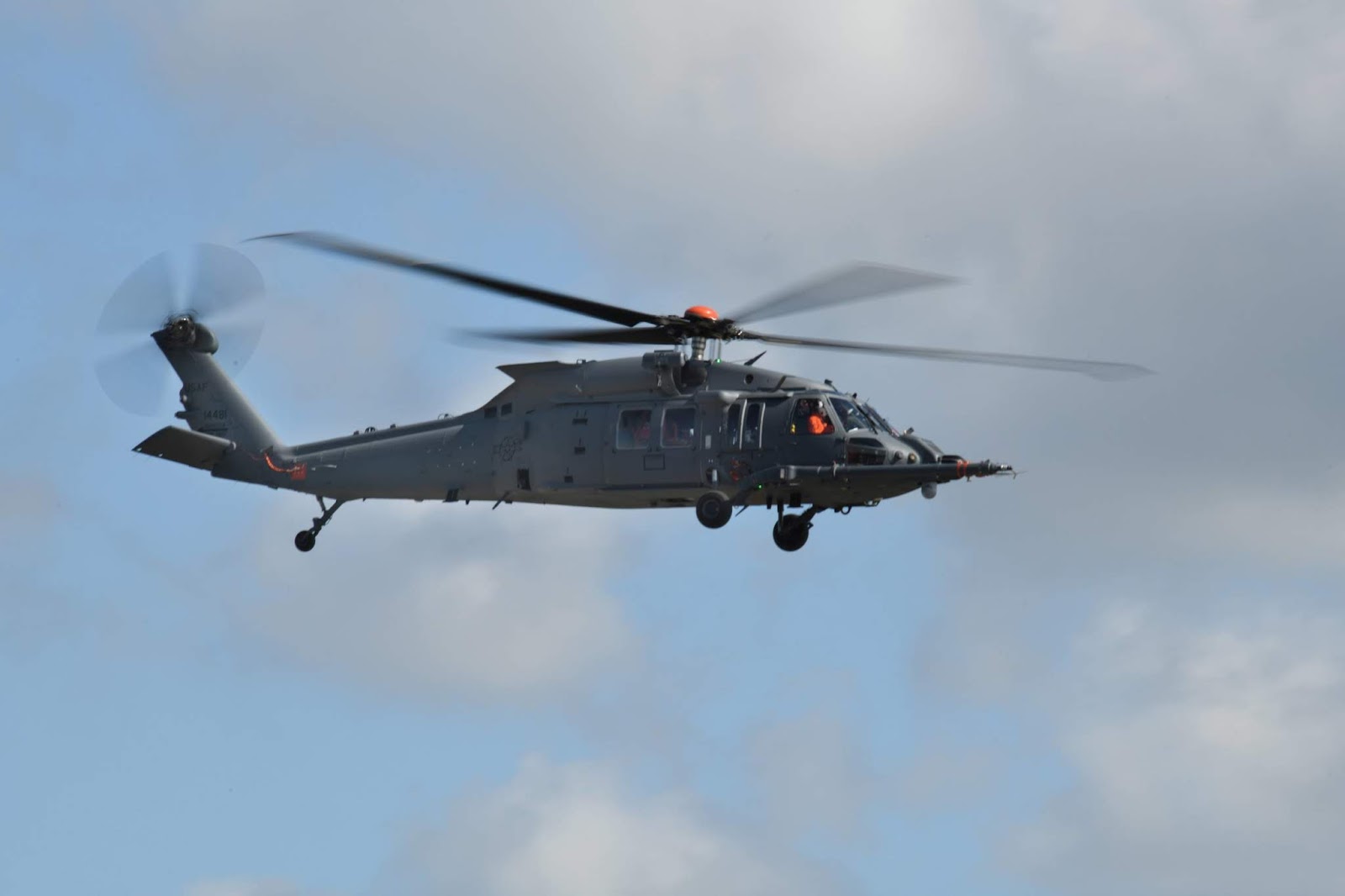
El helicóptero de búsqueda y rescate en combate Sikorsky HH-60W realiza su primer vuelo

La nueva variante del helicóptero ofrecerá a la Fuerza Aérea de los Estados Unidos fiabilidad y capacidades superiores de supervivencia en entornos hostiles, además de radio de acción y alcance mejorados.

WEST PALM BEACH, Florida, 17 de mayo de 2019 /PRNewswire/ -- El Sikorsky HH-60W Combat Rescue Helicopter realizó su primer vuelo ayer en las instalaciones de Sikorsky en West Palm Beach (Florida), un paso importante para la futura entrada de esta nueva aeronave en servicio para operaciones críticas de búsqueda y rescate.

Desarrollado por Sikorsky, una compañía de Lockheed Martin (NYSE: LMT), está basado en el robusto UH-60M Black Hawk. Configurado CSAR para la Fuerza Aérea de norteamericana garantizará que la USAF cumpla su misión de no dejar a nadie atrás.

El tiempo total de vuelo se completó aproximadamente en 1,2 horas, en el que se incluyeron pruebas de comportamiento y respuesta de sistemas y controles de vuelo, estacionarios a baja velocidad y comportamiento general a diferentes altitudes.

"Este logro es otro paso vital hacia la decisión de producción inicial, que será reducida, y la posterior puesta en servicio de esta aeronave tan necesaria, con avanzadas capacidades para el ejército", Dana Fiatarone, Vicepresidenta de Sikorsky Army & Air Force Systems. "Estamos muy satisfechos con los resultados del vuelo de hoy, y esperamos que la recogida de datos durante el programa de pruebas sea productivo".

El vuelo de ayer allana el camino para la decisión sobre su producción en septiembre de 2019 según el cronograma de referencia original, al cual se comprometen tanto Sikorsky como la Fuerza Aérea.

Se espera que un segundo helicóptero HH-60W se incorpore a las pruebas de vuelo la próxima semana, además de un tercer y cuarto prototipo este verano. Estas aeronaves proporcionarán datos críticos durante el transcurso del programa, lo que permitirá a la Fuerza Aérea tomar la decisión de producción.

"El primer despegue del HH-60W es la culminación de importantes avances en desarrollo y diseño. Estamos entusiasmados de avanzar para comenzar la calificación completa del sistema del helicóptero a través del programa de pruebas de vuelo", Greg Hames, director del programa Combat Rescue Helicopter. "Junto con la Fuerza Aérea, nuestro equipo está motivado y comprometido con el avance de este programa, y la entrega de esta aeronave, superior en prestaciones, a nuestros aviadores y aviadoras".

El HH-60W Combat Rescue Helicopter es significativamente más capaz y fiable que su predecesor, el HH-60G Pave Hawk. El aparato cuenta con un nuevo sistema de combustible que casi duplica la capacidad del tanque interno de un UH-60M Black Hawk, lo que le otorga a la tripulación de la Fuerza Aérea un mayor alcance y más capacidad para rescatar a los heridos en el campo de batalla. La especificación HH-60W impulsa sistemas defensivos más efectivos, reducción de vulnerabilidad, armas y seguridad cibernética, además de otras capacidades superiores a los que actualmente tiene el HH-60G.

"Ahora, tras el exitoso primer vuelo del Combat Rescue Helicopter, esperamos completar el programa de los test de vuelo de Sikorsky, las pruebas operativas y la producción de esta aeronave para apoyar las misiones críticas de rescate de la USAF", Edward Stanhouse, Jefe de la Fuerza Aérea de los Estados Unidos, Oficina del Programa de Helicópteros. "El aumento de la capacidad de supervivencia es clave, y anticipamos en gran medida otra serie de performances adicionales que nos proporcionará este aparato".

El programa de registro de la Fuerza Aérea norteamericana solicita 113 helicópteros para reemplazar a los Pave Hawk, que actualmente realizan las operaciones críticas de búsqueda y rescate y misiones de recuperación de personal para todos los servicios militares de los EE. UU. Se fabricarán un total de nueve aeronaves en las instalaciones de Sikorsky en Stratford (Connecticut) durante la fase de desarrollo de ingeniería y fabricación (EMD) del programa: cuatro aeronaves de EMD (Engineering & Manufacturing Development), y cinco unidades de prueba de demostración del sistema (SDTA, System Demonstration Test Articles).

viernes, 17 de mayo de 2019

Lockheed Martin Breaks Ground On New Production Facility

225,000-square foot building addresses U.S. government's JASSM® inventory increase

TROY, Ala.May 16, 2019 /PRNewswire/ -- U.S. Air Force and local Alabama officials joined Lockheed Martin (NYSE: LMT) executives today to break ground on the company's new strike systems production facility in Troy.
The planned 225,000-square-foot facility, combined with the current cruise missile production factory, will provide the necessary space to meet the U.S. Air Force's objectives.
"This expansion represents Pike County Operations' long-standing commitment to meet our customer's current and future needs as well as to bring more well-paying jobs to the area," said Frank St. John, executive vice president at Lockheed Martin Missiles and Fire Control. "All our employees come to work with an unwavering commitment to help our customers succeed in their mission to create a more secure and prosperous world."
Building construction is slated for completion in 2021 with Joint Air-to-Surface Standoff Missile Extended Range (JASSM-ER) production ramping up in the second half of 2022.
"We're pleased to see Lockheed Martin continue to invest in our community with the addition of this new manufacturing building," said Jason ReevesTroy Mayor. "Their growth not only leads to more jobs – it enhances sustainable growth for our region."
Lockheed Martin's Pike County Operations is the recipient of many continuous improvement and performance excellence awards.

martes, 4 de diciembre de 2018

Lockheed Martin And Airbus Sign Memorandum Of Agreement On Aerial Refueling

MADRIDDec. 4, 2018 /PRNewswire/ -- Lockheed Martin (NYSE: LMT) and Airbus have signed an agreement to jointly explore opportunities to meet the growing demand for aerial refueling for U.S. defense customers.
The companies will seek to provide aerial-refueling services to address any identified capacity shortfall and to meet requirements for the next generation of tankers capable of operating in the challenging environments of future battlespace.
"Reliable and modernized aerial refueling is an essential capability for our customers to maintain their global reach and strategic advantage," said Lockheed Martin Chairman, President and CEO Marillyn Hewson. "By combining the innovation and expertise of Airbus and Lockheed Martin, we will be well-positioned to provide the United States Air Force with the advanced refueling solutions needed to meet 21st century security challenges."
"The U.S. Air Force deserves the best aerial-refueling technology and performance available under the sun and this great industry team, Lockheed Martin and Airbus, will offer exactly that," said Tom Enders, Airbus CEO.
The companies are taking a cooperative approach, with the Airbus A330 Multi Role Tanker Transport (A330 MRTT) at its heart, to examine a broad spectrum of opportunities. These may range from ways to support critical near-term air-refueling needs, such as a fee-for-service structure to conceptualizing the tanker of the future.
Airbus Defence and Space Head of Military Aircraft Fernando Alonso said, "The A330 MRTT has been selected by a dozen nations around the world. It is extensively proven in live operations and has been repeatedly praised by major air forces. We are convinced that the combination of Airbus' tanker expertise with Lockheed Martin's extensive U.S. presence, has the potential to provide highly effective solutions for current and future U.S. military aerial refueling requirements."
Lockheed Martin has a long and successful history of systems integration, manufacturing and maintenance, repair and overhaul operations with large airlift and tanker aircraft. When combined with Airbus expertise in this competitive space, the two companies will field a strong team to address future air refueling needs.
"Airbus is an industry leader in the aerial refueling area, and Lockheed Martin is known for cutting-edge defensive technologies and capabilities," said Michele Evans, executive vice president, Lockheed Martin Aeronautics. "This is a great opportunity for our two companies to combine our expertise – cooperating to develop world-class solutions for critical needs around the world."

martes, 25 de septiembre de 2018

U.S. Air Force selects the MH-139 based on the world-class Leonardo AW139 helicopter for Intercontinental Ballistic Missile protection and government and security forces transport missions

The MH-139 programme, offered by Boeing as prime contractor, is valued at $2.4 billion for up to 84 helicopters training devices and associated support equipment with initial readiness by 2021   


Profumo: “This result is testament to Leonardo’s ability to meet the most stringent requirements of major customers, and a recognition of the Company as a strong, reliable partner and long established contributor to the US industry”   


Philadelphia-built aircraft will be  operated by the U.S. Air Force to replace their UH-1N Huey fleet leveraging modern technology, high performance and with a savings of $1 billion in acquisition and lifecycle costs over the life of the fleet   


Over 900 AW139s are already in service among 270 governments, militaries and companies across the world, with 260 assembled and delivered from Philadelphia     


Rome, 25 September 2018– The United States Air Force (USAF) selected the MH-139, based on the Leonardo AW139 and offered by Boeing as prime contractor, to replace its fleet of UH-1N “Huey” helicopters. The programme awarded today is valued at $2.4 billion for up to 84 helicopters, training  devices and associated support equipment. With initial operational capability expected by 2021, the aircraft will take over the role of protecting the nation’s intercontinental ballistic missile (ICBM) bases and the transportation of U.S. government and security forces.


Alessandro Profumo, Chief Executive Officer, Leonardo said “We are extremely proud of this outstanding result. Major customers continue to rely on Leonardo to meet the most stringent requirements like the critical mission of protecting missile bases and transporting government personnel and special forces. This selection is also testament to Leonardo as a strong, reliable partner and long established contributor to the US industry.”    


The MH-139 leverages the market-leading Leonardo AW139 baseline, a modern, nondevelopmental, multi-mission helicopter that is in service worldwide and has already demonstrated its capabilities in protecting critical infrastructures and  transporting military and government representatives in various nations.


Gian Piero Cutillo, MD Leonardo  Helicopters, said “Today’s announcement is a strong recognition of the world-class quality and competitiveness of our product to meet the most demanding needs of leading  customers.”


The MH-139 is the right-sized aircraft for the mission, exceeds the Air Force’s  speed, payload, range, armament and survivability requirements for protecting ICBM bases, and is perfect for VIP transport. The type features modern design and the best level of affordability with a savings of $1 billion in acquisition and lifecycle costs over the life of the fleet. The AW139 is assembled at the Leonardo northeast  Philadelphia plant, with additional components to be integrated into the military MH-139 at the Boeing Philadelphia facility in Ridley Township, Pa.


William Hunt, CEO, AgustaWestland Philadelphia Corporation, said “We are happy that the U.S. Air Force has selected our team to deliver a new fleet of Philadelphia-built MH-139s. Our Air Force deserves the best tools; this is  the right helicopter for their mission. The more than $125M investment made by Leonardo in the Philadelphia facility demonstrates that we are fully prepared to execute in support of this contract. We look forward to working with Boeing on this programme and we’re committed to deliver according to expectations of the prime contractor,  the US Government and taxpayers.”


The AW139 helicopter   


The most successful helicopter programme in the last 15 years, the AW139 has set new standards through advanced technology and high performance, reliability, safety, flexibility and cabin space. The AW139 is the ideal solution to operate in harsh  environments and weather conditions. Its modern avionics reduces crews’ workload allowing the pilot to focus on the mission. Over 270 governments, militaries and companies across the world have ordered nearly 1100 AW139s, confirming itself as the bestselling aircraft in its category and with more than 900 already in service exceeding 2 million flight hours. More than 260 of the helicopters have been  assembled and delivered from Philadelphia. The AW139 is able to perform a wide range of roles including government, EMS, SAR, patrol, homeland security and transport duties. Many of the AW139s today in service in the U.S. perform law enforcement and public service missions in Maryland, New Jersey and California.

jueves, 16 de agosto de 2018

3rd OSS honors a storied past

U.S. Air Force Staff Sgt. Paul Babbitt, with the 3rd Operations Support Squadron aerospace flight equipment section, holds the 3rd OSS patch he designed at Joint Base Elmendorf-Richardson, Alaska, July 12, 2018. Babbitt had the opportunity to design the new patch after squadron leadership thought an update was necessary. (Photo by Senior Airman Javier Alvarez)

JOINT BASE ELMENDORF-RICHARDSON, Alaska —
It’s been said that every successful air mission begins and ends on the flightline. That’s true for a Joint Base Elmendorf-Richardson unit with a long legacy.

The 3rd Airdrome Squadron was born out of necessity on November 7, 1942 at Lockburne Army Air Base, Ohio.

Tasked to rapidly deploy and establish airstrips in remote locations, the 3rd AS advanced through the Pacific during the island-hopping campaign of World War II. From one location to the next, service members mapped, dug, dragged, plowed, cleared, filled, paved and maintained landing strips, in support of air operations from New Guinea to the Philippines, Okinawa and Japan – all the while combating torrential weather and a relentless enemy.

“You have to be a student of history to understand where we’re going, and you have to be a student of history to know where we can go,” said U.S. Air Force Lt. Col. John Rogers, 3rd Operations Support Squadron commander. “[The squadron showed] you need to have an expeditionary function in your OSS. You don’t just show up with airplanes on an airfield without having someone on the ground doing all the prep work.”

In a Library of Congress archived interview, then-Army Air Corps Capt. Gilbert Brahn, 3rd AS aircraft engineer officer, recalled some of the ever-present dangers faced during the war.

“I remember very vividly a kamikaze plane punching into the water not far off from the ship I was on,” he said. “The anti-aircraft had shot down that plan and another one. There were other planes that were warded off because of it. Things were clear and the sky was clear.”

The heavens would not remain clear for long as Mother Nature had different plans.

“In November 1944, there was 40 inches of rain [in Leyte, Philippines],” Brahn said. “We were in awful mud. There was a real problem with the preparation of the airfields.”

Despite atmospheric drawbacks, the men went on enduring much of the same – ultimately reaching Japan in the summer of 1945.

“The squadron was involved in the Japanese surrender at the end of World War II,” said Christopher Koonce, 673d Air Base Wing historian. “They were brought to Atsugi, Japan just before the formal surrender to establish U.S. presence for Gen. Douglas Macarthur’s arrival. This was the first transient point in the early stages of U.S. occupation.”

By war’s end, the squadron had navigated across three countries, covering more than 3,500 miles in the process. The unit was inactivated soon after the war, reactivated for a short while in Kimpo, Korea, and finally inactivated Oct. 8, 1948.

The 3rd AS remained dormant for 43 years before being rebranded the 3rd Operations Support Squadron and reactivated at then-Elmendorf Air Force Base Dec. 6, 1991.

“It’s a very diverse squadron, and I think being Arctic Wolves, embodies the squadron,” said U.S. Air Force Staff Sgt. Paul Babbitt, with 3rd OSS aerospace flight equipment. “If only one wolf in the pack goes out to hunt, not everyone gets to eat. That fearless adventurous spirit. That’s the spirit of the 3rd OSS.”

Today, 225 Airmen across 26 different Air Force Specialty Codes make up the 3rd OSS.

“[The 3rd OSS] is really unique because you have people like us in aircrew flight equipment who pack chutes and making sure all the survival equipment is good to go so pilots can survive in the sky,” Babbitt said. “You have people in Survival, Evasion, Resistance and Escape teaching aircrew how to survive. You have airfield management who ensure the airfield is good and planes can take off and land, and many others.”

Taking a page from the history books, the Air Force in some ways is reverting to those early days of the squadron, Koonce said.

“With the new Agile Combat Employment, we’re going to a location, flying for a few hours or days, and moving to a new location,” Koonce said. “That’s essentially what they did in WWII. They would get to an island; sometimes the air field would be a small dirt strip and maybe they’d have to extend or expand. Maybe there would be holes because they dropped bombs on it so they’d have to repair that.”

Today’s OSS Airmen face a different set of challenges; with each technological advance comes the need for more stringent airfield requirements. What may have worked for propeller aircraft of days past may not be sufficient for fifth generation fighters.

“We’re now in a position where we’re doing that exact same thing,” Rogers said. “I’m sending people to austere locations, and asking what would it take to get an airplane here?


“This is the most diverse OSS in the Air Force,” he said. “You trust us to go out to these airfields that are in the middle of nowhere, and not only to deploy there and support operations that are ongoing, but research and come up with the shopping list of things we have to get to open them and enable them. That has a national-level impact. That’s a pretty amazing thing.”

lunes, 7 de mayo de 2018

Hurricane Hunters Visit Panama

Video: Elizabeth Lara-Collado
U.S. Embassy Panama

The USAF WC-130J hurricane hunter aircraft visited Panama City, Panama. 
The aircraft was accompanied by NOAA's Gulfstream IV-SP (N49RF), nicknamed "Gonzo".


jueves, 3 de mayo de 2018

FIRST LIGHT: FOURTH U.S. AIR FORCE SBIRS SATELLITE SENDS FIRST IMAGES BACK TO EARTH

SBIRS GEO Flight-4 Completes Baseline Constellation, Global Coverage

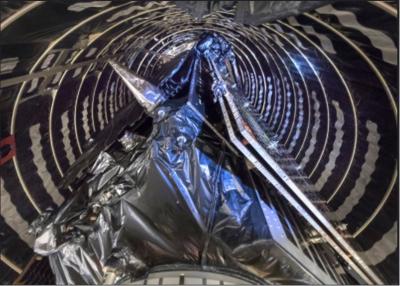
The U.S. Air Force’s SBIRS GEO Flight-4 satellite encapsulated within its protective fairings prior to its January 19, 2018 launch.

BUCKLEY AIR FORCE BASE, Colo., May 2, 2018 /PRNewswire/ -- The U.S. Air Force's fourth Space Based Infrared System (SBIRS) satellite transmitted its first images back to Earth. The milestone, known as "first light," occurred in February when the SBIRS GEO Flight-4 satellite, built by Lockheed Martin (NYSE: LMT), turned on its powerful sensors for the first time during space vehicle checkout.

SBIRS GEO Flight-4 is the latest satellite to join the Air Force's orbiting missile warning constellation. Equipped with powerful scanning and staring infrared surveillance sensors, the satellite collects data for use by the U.S. military to detect missile launches, support ballistic missile defense, expand technical intelligence gathering and bolster situational awareness on the battlefield.
Launched on Jan. 19, SBIRS GEO Flight-4 began responding to the Air Force's 460th Space Wing's commands just 37 minutes after liftoff. Using its liquid apogee engine, the satellite successfully propelled itself to a Geosynchronous Earth Orbit (GEO) altitude of about 22,000 miles. There, it deployed its solar arrays and antennas, and began initial check out. 
"First light was a tremendous milestone for SBIRS GEO Flight-4 and we are very pleased with the high quality and definition of the images we received back," said Tom McCormick, vice president of Lockheed Martin's Overhead Persistent Infrared (OPIR) systems mission area. "With the launch of this satellite, SBIRS can now provide global coverage, with better-than-specified sensor pointing accuracy and the ability to detect even more targets than anticipated."
SBIRS GEO Flight-4 completes the baseline SBIRS constellation. It joins SBIRS GEO Flights-1, 2 and 3, which were launched in 2011, 2013 and 2017 respectively.
In 2014, the Air Force awarded Lockheed Martin a $1.86 billioncontract for the SBIRS GEO-5 and 6 spacecraft. Following that award, the company offered the government a no-cost contract modification, transitioning to its modernized LM 2100 satellite bus, to demonstrate how production cycle times and costs could be drastically reduced on future space vehicles. The modification also provides improved resiliency and validates how modernized sensor suites could be incorporated. 
SBIRS GEO-5 and GEO-6 are currently greater than 50 percent through production and on track for delivery to the Air Force very early in the next decade.

viernes, 20 de abril de 2018

U.S. Air Force selects Rockwell Collins for expanded avionics support on KC-135s

  • Repairs to maintain Global Air Traffic Management (GATM) components installed over the last two decades
Rockwell Collins has been awarded multiple repair contracts by the U.S. Air Force to support Global Air Traffic Management (GATM) components on the entire KC-135 tanker fleet. These contracts, valued at approximately $27 million over the next five years, will keep the aircraft flying and in compliance with Communication, Navigation, Surveillance and Air Traffic Management (CNS/ATM) mandates. 

“After many years of partnering with the Air Force in developing and delivering our Flight2 capability, we’ll continue to deliver results and work to keep the KC-135 fleet mission ready,” said Thierry Tosi, vice president and general manager, Service Solutions for Rockwell Collins. 

The contract expands Rockwell Collins’ existing footprint on the KC-135, which currently provides support for the Flight2™ integrated avionics system and communications equipment on the platform. 

The GATM upgrade program was originally awarded to Rockwell Collins by the Air Force in 1999 to replace outdated avionics equipment that wasn’t capable of meeting new CNS/ATM mandates. GATM components included the integration of a new flight management system, new inertial navigation units, military flight planning with tanker-unique patterns, integration to the existing analog autopilot, full CNS/ATM capability for Required Navigation Performance (RNP), Area Navigation (RNAV), Control Pilot Data Link Communications (CPDLC) and Air Operations Center (AOC) functionality.