Mostrando entradas con la etiqueta AW139. Mostrar todas las entradas

jueves, 24 de mayo de 2018

Sociedad de Salvamento y Seguridad Marítima (SASEMAR)

Sikorsky S-61N, Helimer 209. ©Roi R. Labrador
El día 21 de julio de 1991 llegaba al aeropuerto de Alvedro, A Coruña, el primero de los helicópteros de la DGMM (aunque SASEMAR dependa de  la misma no se crearía hasta el año 1992, constituyéndose en el 93). 

De manera que el pasado verano se ha cumplido el XXV aniversario del inicio del servicio estatal de búsqueda y rescate marítimo a través de la Dirección General de la Marina Mercante (no aún con unas siglas propias), y veintiseis años desde la llegada de su primer helicóptero.

Por lo tanto este año Salvamento Marítimo sí celebra oficialmente su veinticinco cumpleaños; contando desde que empezó a rodar en 1993 y no desde su año de creación en el 92. Asimismo en julio de este 2018 serán veintisiete los años que han pasado desde la llegada del primero de los cinco Sikorsky S-61N a la base gallega de Alvedro (A Coruña).


Leonardo Helicopters AW139, Helimer 215. ©Ezequiel Millet
SASEMAR, a través de la experiencia acumulada a lo largo de este cuarto de siglo, se ha convertido en una muy clara referencia europea así como, por volumen en número de medios/km de  costa, en uno de los servicios SAR civiles más completos a nivel internacional.


S-61N, A Coruña 


Sikorsky S-61N, Helimer 210 y 209. ©Ezequiel Millet

El Helimer Galicia fue el primero de los cinco Sikorsky S-61N que se fueron incorporando gradualmente para cubrir los puntos más peligrosos y con mayor tráfico marítimo de  nuestras costas (7.905 km), además de las aguas de responsabilidad SAR asignadas a España mediante el Convenio SAR (Convenio Internacional sobre Búsqueda y Salvamento Marítimo -OMI-), el cual abarca 1,5 millones de km² (tres veces la superficie del territorio nacional). 

Lógicamente, en el apartado de los helicópteros siempre hay que contar con el radio de acción; la media en condiciones normales es de unas 200-220 nm (contando con los 30’ de combustible de reserva obligatorios con los que ha de aterrizar).

Estos primeros cinco S-61N fueron denominados Helimer (acrónimo de  helicóptero y Marina Mercante), a los que se les sumó el sobrenombre de las CCAA o zonas costeras que cubrían. Estos fueron los siguientes:

- Helimer Galicia.
- Helimer Cantábrico.
- Helimer Mediterráneo.
- Helimer Andalucía.
- Helimer Canarias.


Plan Nacional de Salvamento 2006-09 

A través del PNS (Plan Nacional de  Servicios Especiales de Salvamento de la Vida Humana en la Mar y de la Lucha Contra la Contaminación del Medio Marino) -mayo del 2006 y para el período comprendido durante el mismo-, se duplicó la flota  de helicópteros existente.

El objetivo fue que en 2009 ya hubiera diez Helimer operativos, de los cuales ocho serían propiedad de SASEMAR y quedarían dos S-61N fletados a la ya entonces Inaer (anteriormente Helicsa, hoy Babcock MCS). 


Aérospatiale AS365 N2 Dauphin 2. ©Jose López de Alba
Las primeras nuevas unidades, que se incorporaron en 2006 fueron dos Aérospatiale AS365 N2 Dauphin 2 (posteriormente fabricados por la división Eurocopter, hoy Airbus Helicopters), fletados en régimen de alquiler a la empresa concesionaria del servicio (recordamos, por entonces Inaer), llegando hasta 6 bases -ya que uno de estos Dauphin sustituyó a otro de los Sikorsky S-61N más antiguos-. 

Los dos helicópteros franceses sí contaban con AP de tres ejes, podían mantener parámetros durante la navegación pero carecían de un cuarto para el estacionario automático, con lo cual no incorporaban Modos SAR (búsquedas tráficos y grúas debían de realizarse completamente en manual). 


AW139, Helimer 202. ©Roi R. Labrador
En 2007 AgustaWestland (Leonardo Helicopters en la actualidad) hizo entrega a SASEMAR de los dos primeros AW139 adquiridos en propiedad: Helimer 201 y 202 (el resto de unidades llegarían paulatinamente, finalizando la misma en el 2011). 

Así, durante la mayor parte del año 2008, la flota de helicópteros de Salvamento Marítimo estuvo formada por un total de nueve unidades:

- Helimer 201, 202 y 203, AW139 (en propiedad), y cubriendo las zonas: Mediterráneo Norte, Canarias Occidental y Cantábrico, respectivamente. 

- Helimer 208, 209 y 210, Sikorsky S-61N (propiedad de la por entonces Inaer) en Canarias Oriental, Estrecho y Galicia, respectivamente (hoy en día el 210 tiene base en Santiago de Compostela, el 209 se retiró del servicio en julio del pasado 2017, y el 208 hace sobre cuatro años que también fue dado de baja). 

- Helimer 204, 205 y 207 (Inaer, hoy Babcock MCS). Los dos primeros eran AW139 y el tercero uno de los Dauphin N2.


Helicópteros Helimer en la actualidad  


Airbus Helicopters H225, Helimer 401. ©Hugo Ramos
Desde la llegada de los ocho Leonardo Helicopters AW139 adquiridos en propiedad, dentro del actual PNS 2010-18*, el número de helicópteros se ha elevado a once.

*Plan Nacional de Salvamento 2010-18.

Sus bases son: 

- Santiago (Lavacolla. IATA: SCQ, OACI: LEST), Sikorsky S-61N (Helimer 210).

- A Coruña (Alvedro. IATA: LCG, OACI: LECO), Airbus Helicopters H225 (Helimer 401).

Las dos bases gallegas son las únicas que mantienen los mismos dos helicópteros, ya que las otras nueve están cubiertas por AW139 pero sin distintivo fijo, puesto que las máquinas italianas van rotando según disponibilidad por calendarios de revisiones.

- Gijón (helipuerto de El Musel, IATA: n/d. OACI: LEEL). 


- Santander (Seve Ballesteros. IATA: SDR, OACI: LEXJ).

- Tarragona (aeropuerto de Reus. IATA: REU, OACI: LERS).

- Valencia (Manises. IATA: VLC, OACI: LEVC).

- Palma  de Mallorca (Son Sant Joan. IATA: PMI, OACI: LEPA).

- Jerez de la Frontera (IATA: XRY, OACI: LEJR).

- Almería (IATA: LEI, OACI: LEAM).

- Gran Canaria (Gando. IATA: LPA, OACI: GCLP).

- Tenerife Sur (Reina Sofía. IATA: TFS, OACI: GCTS).


AW139, Helimer 203 en la base de El Musel (Gijón). ©Jose López de Alba
Los AW139 fueron encargados por el Ministerio de Fomento con todos los equipos y sistemas SAR, al fabricante italiano, en febrero de  2006 tras ganar la compañía transalpina el concurso público de adquisición. 

Como hemos comentado, del inicial modelo S-61N, del fabricante norteamericano Sikorsky, actualmente sólo queda uno operativo (EC-FVO “Helimer  210”), que previsiblemente a través del nuevo contrato de adjudicación será retirado en un futuro no muy lejano...


lunes, 16 de abril de 2018

Mission ready for 2018

Simplicity, Agility, Collaboration, Innovation and Ownership. Five words that hold the secret to CHC Helicopter’s success. Despite challenging market conditions in the energy sector, our corporate values and have helped us adapt, develop smarter, safer ways of working and embrace new opportunities.

Nowhere has this rapid evolution been more apparent than in the emerging field of renewables. Offshore wind operators are increasingly recognising the benefits of utilising helicopter operations to support construction and maintenance activities.

In the past five years, offshore wind has emerged as a mainstream sustainable energy source in Europe. Close to 13GW of installed capacity is already supplying power to homes and businesses across Europe, but installed offshore capacity is expected to increase to 70GW by 2030, according to WindEurope, the voice of the European wind industry. By that time, it is expected to be meeting between 7-11 percent of Europe’s energy demand, with 84 percent of that capacity installed in the North Sea.

At the heart of CHC’s renewables offer is our growing reputation in supporting Commercial Helicopter Hoisting Operations (CHHO); a versatile capability being shaped through our operations in Den Helder in the Netherlands and Humberside in the UK.

“CHC is in a strategic position to be able to provide essential services from a ring of operational bases around the North Sea, so we are ideally located to serve the entire basin”, explains Jan Lalkens, Base Manager, Den Helder. “That applies to traditional oil and gas, but increasingly renewables”.

Up until recently, construction support on offshore wind developments has primarily been provided by marine vessels, but as larger capacity arrays move into ever deeper waters and further offshore, helicopter services become increasingly attractive to support crew transfers. “What’s more, weather conditions in the North Sea sometimes mean marine operations simply aren’t suitable for supporting construction and maintenance work. In such instances, a helicopter can often perform a vital function instead,” adds Jan. “Increasingly, customers are seeking a dual service approach”.

As the number of connected turbines increases across the region, so too does the need for planned maintenance, servicing for which will often necessitate an engineer being lowered directly onto the turbine.

“It’s then that our expertise in CHHO comes into play”, says Jan. “CHC is the first of the big three helicopter operators to embrace the service, offering a solution based on our established offshore oil and gas standards”.

As says Roger van Schijndel, Manager Flight Operations explains, CHHO builds on CHC’s established operational track record in winching through of our worldwide Search and Rescue capability. “However, the requirements and methods of operation are completely different”.

Roger continues: “For Commercial Helicopter Hoisting Operations an aircraft must be capable of maintaining single engine performance in a high hover until the passenger being hoisted can be safely retrieved or put back on the spot. That is a mandatory requirement. If an engine stops, basically nothings happens and the aircraft remains in the same place. That safety margin far exceeds current requirements for the SAR mission where the focus is on saving a life, not carrying passengers”.

The Leonardo AW139 has proved to be an exceptionally capable and versatile aircraft for delivering CHHO missions. As CHC global Centre of Excellence for all Leonardo aircraft, Den Helder is ideally equipped with the skills, knowledge and operational insight to develop and refine safe and efficient CHHO operations for our customers.

The Southern North Sea bases currently operate 13 aircraft, almost all of which are capable of supporting hoisting operations. “The equipment is almost plug and play in terms of versatility and our ability to adapt to different mission profiles”, adds Roger. “It’s a simple task removing seating from the aircraft, install the winch and the aircraft is mission ready”.

Unique training capability
In a first for the Netherlands, CHC recently opened a new training facility in Den Helder, which will provide dedicated classrooms and dry training facilities to support the training of engineers in preparation for hoisting operations.

In terms of crew training, CHC has unmatched experience operating the AW139 ­– we were the worldwide launch customer for the aircraft type in 2004. Prior to conducting commercial hoisting, all CHC crews complete a specialist, modular-based training programme, developed in-house, to equip them with the skills necessary to conduct safe and efficient operations. In addition to simulator-based training delivered in conjunction with manufacturer Leonardo, in Italy, crews undertake hoisting training in support of offshore operation; wind turbines; and if required, a module focused on marine hoisting.

“The first crews and trainers are now mission-ready for offshore and wind turbine hoisting. This training was made possible by international collaboration with our SAR business units in the UK and Australia. However, future training will vary depending on the scope of work required by the customer”, explains Dennis Groeneveld, Manager Crew Training. “Ultimately, it’s about having the correct balance of skills required to deliver all types of missions”.

With almost half of new offshore wind capacity set to be installed in Europe between 2018-2020 destined for UK waters, operations from our Humberside base, on the UK’s east coast, have been expanded.

In 2017, CHC secured a six-year contract with Ørsted to support the construction and first five years of operations on Hornsea Project One, which once completed will be the biggest windfarm in the world. Located 120km off the coast of Yorkshire, UK the windfarm will ultimately supply clean electricity to well over one million homes. The contract will be delivered in partnership with Uni-Fly – a specialist operator with extensive experience of hoisting operations to offshore wind turbines and installations.

“Contract operations commenced in early January 2018, using an AW139 aircraft to deliver crew change flights to various vessels and jack-up rigs conducting operations on the Hornsea 1 construction park”, explains Dave Riches, Base Manager, Humberside and Norwich. “In April 2018, the first Uni-Fly AW169 arrives, which be a dual role aircraft. It will take care of some crew change flying, as well as begin to conduct some hoisting operations”.

The partnership with Uni-Fly is based on a tried and tested collaborative model, shaped through collective experience gained from an earlier Ørsted wind farm project - Westermost Rough. “When Uni-Fly first moved to Humberside, operating an EC135 aircraft on hoisting operations in 2015, CHC provided handling operations and ramp support,” says Dave. “We also provided space in our hangar for maintenance and acted as the main point of contact with the customer. That model has formed the basis for our Hornsea contract“.

Being based at the same heliport facility effectively means we work as a single, joined-up operation”.

Preparations for the start of operations of the AW169
CHC will be supporting Uni-Fly during the AW169’s entry into service later this year. Following the success of our recent entry into service programme developed for the H175 in the UK, as well as the AW189 in Australia, CHC will assist Uni-Fly as it transitions from single pilot operations to dual crew operations on the new aircraft.

Significant investment at Humberside has also completely revamped the heliport, providing enhanced passenger facilities and new information screens. Briefing rooms have been expanded to accommodate larger aircraft types and provide more space for changing, while the inbound arrivals area has been streamlined.

Ultimately, today’s customers are seeking transnational solutions. They want a single, safe, reliable and versatile partner to serve their needs across different countries and regions. With our base at Den Helder emerging as a de facto global centre of excellence for commercial helicopter hoisting operations, coupled with our growing capability in the UK, CHC has the equipment, infrastructure, skills and experience to serve the needs of a rapidly-expanding global renewables industry.

viernes, 13 de abril de 2018

Leonardo focuses on integrated maritime defence and security offer at DSA 2018

•  Leonardo,  operating  out  of  offices  in  Kuala  Lumpur,  has  supported  Malaysia’s  security for  years,  providing  key  technologies  and  in-country  support   

•  At DSA,  the  Company is  actively  promoting  key  products  for  maritime  opportunities  in Malaysia,  including  the  ATR72-MP  maritime  patrol  aircraft,  the  AW159  multi-role  maritime helicopter,  and  airborne  and  naval  electronics   

•  Leonardo  sees  the  Asia  Pacific  region  as  key  to  the  future  of  the  Company  and  is expanding  its  commercial  network  with  new  offices  and  developing  local  collaborations in  line  with  the  Company’s  2018-2022  Industrial  Plan 

Kuala  Lumpur,  13  April  2018  –  Visitors  to  Defence  Services  Asia  2018  (DSA)  in  Kuala  Lumpur, Malaysia,  will  be  able  to  visit  Leonardo  [at  stand  number  H2C,  20426]  to  find  out  all  about  the Company’s  latest-generation  aircraft,  helicopters,  naval,  air  defence  and  airborne  electronics systems.  Leonardo  has  supported  the  security  of  Malaysia  for  many  years  and  has  representative offices  in  Kuala  Lumpur. 

Leonardo’s  presence  in  Malaysia  includes  over  60  helicopters  in  service  with  the  Malaysian  Armed Forces,  Fire  &  Rescue  Department  (Bomba),  Royal  Malaysia  Police,  Maritim  Malaysia,  commercial and  private  owners.  For  the  Royal  Malaysian  Navy,  the  Company  has  supplied  naval  guns  such  as the  OTO  76/62  SR  "super  rapid",  light  torpedoes  and  heavy  "Black  Shark”  torpedoes.  Supporting the  monitoring  of  the  whole  of  Malaysia’s  airspace  for  both  civil  and  defence  applications, Leonardo  has  provided  its  RAT31DL  for  air  defence  and  has  delivered  air  traffic  management solutions  for  Mersing,  Langkawi  and  Kuala  Lumpur  International  Airports.  In  March,  Leonardo completed  Factory  Acceptance  Test  activities  for  the  upgrade  of  the  new  air  traffic  control  centre  at Kuala  Lumpur  International  Airport  (KLIA).

At  DSA,  Leonardo’s  main  focus  will  be  on  Malaysia’s  maritime  security  requirements,  offering solutions  based  on  the  latest  technology  such  the  ATR72MP  patrol  aircraft.  In  the  region,  there  is  a major  emphasis  on  protecting  maritime  territory,  for  example  safeguarding  commercial  activities, fighting  piracy  and  providing  coastal  security.  Critical  to  this  offer  is  the  Company’s  ATR  72MP, which  was  exhibited  for  the  first  time  outside  of  Italy  at  Malaysia’s  LIMA  exhibition  last  year  and  is being  offered  to  Malaysia  for  its  maritime  patrol  requirements.  The  ATR  72MP  is  equipped  with Leonardo's  ATOS  surveillance  mission  system,  which  offers  a  user-friendly  ‘mission  tactical picture’  by  fusing  data  collected  by  the  aircraft's  suite  of  sensors,  including  the  Leonardo  Seaspray AESA  surveillance  radar. 

For  Malaysia’s  anti-submarine  and  anti-surface  warfare  requirements,  Leonardo  is  promoting  its latest-generation  AW159  helicopter.  Equipped  with  Leonardo’s  Seaspray  7000E  series  AESA radar,  which  has  a  patented  small-target  detection  mode  that  can  identify  submarine  periscopes, as  well  as  a  sonar,  EO  sensors,  anti-surface  missiles  and  torpedoes,  the  AW159  is  the  most capable  multi-role  maritime  helicopter  in  its  weight  class.  It  is  already  in  service  with  the  UK’s  Royal Navy  and  the  Republic  of  Korea  Navy  and  is  being  offered  in  Malaysia  to  meet  its  future  naval helicopter  requirements.  Other  helicopters  to  be  showcased  at  DSA  include  the  best-selling AW139  and  AW189  helicopters,  more  than  30  of  which  are  in  service  in  Malaysia  performing  a wide  range  of  roles.  Leonardo  is  also  continuing  to  expand  its  helicopter  capabilities  in  Malaysia through  a  further  programme  of  investment  centred  on  its  regional  maintenance  and  support  centre at  Kuala  Lumpur's  Subang  -  Sultan  Abdul  Aziz  Shah  Airport. 

With  heritage  and  expertise  in  military  pilot  training  and  a  longstanding  position  as  supplier  of training  assets  to  the  Royal  Malaysian  Air  Force,  Leonardo  is  presenting  its  M-346  aircraft  to Malaysia.  The  M-346  is  the  most  advanced  jet  trainer  aircraft  available  on  the  market  today  and  the only  one  specifically  designed  to  prepare  pilots  for  the  latest  generation  of  high  performance aircraft.  The  M-346  is  a  winner  of  global  competitions  and  is  in  service  with  the  air  forces  of  Italy, Singapore,  Israel  and  Poland,  which  recently  announced  an  order  for  four  additional  M-346s.  The M-346  is  the  cornerstone  of  an  integrated  training  system  which,  thanks  to  a  Live-VirtualConstructive  environment,  allows  for  the  simultaneous,  real-time  training  of  pilots  in  the  air  and  on the  ground  in  the  Full  Mission  Simulator  in  complex,  networked  scenarios.   An  evolution  of  the  proven  M-346  advanced  jet  trainer,  the  new  M-346FA  (Fighter  Attack)  variant  is a  highly  efficient  and  reliable  radar-equipped  multirole  combat  aircraft  designed  to  meet  an increasingly  wide  range  of  operational  needs.  With  an  integrated  Grifo  multi-mode  fire  control  radar from  Leonardo,  targeting  and  RECCE  pods  and  a  defensive  aids  system,  the  M-346FA  is  well suited  to  air-to-ground  scenarios,  performing  CAS/COIN  and  Interdiction  with  Precision  Guided Munitions,  air-to-air  missions  such  as  air  policing  and  airspace  control  and  tactical  reconnaissance, all  at  a  far  lower  cost  than  with  front-line  fighters.

For  air-defence  and  surveillance,  Leonardo’s  RAT31DL  and  KRONOS  radar  systems  will  be  on show.  With  over  50  systems  sold  worldwide,  including  to  Malaysia,  the  Company’s  RAT31DL  is NATO’s  primary  air  defence  sensor.  KRONOS  is  a  multi-functional  radar  family  which  can  detect, track  and  identify  targets  and  to  provide  weapon  systems  with  targeting  data,  including  the provision  of  TBM  (Tactical  Ballistic  Missile)  defence  capabilities.  The  KRONOS  radar  family includes  versions  for  naval  and  land  missions  and  around  50  systems  have  been  sold  to  date. 

As  a  truly  international  company,    Leonardo  has  the  capability  and  flexibility  needed  to  be  able  to export  its  proprietary  European  technology  to  customers  around  the  world  within  partnering agreements,  local  collaborations  and  JVs.  One  such  area  is  airborne  electronics.  The  company’s Seaspray  and  Osprey  AESA  (Active  Electronically  Scanned  Array,  or  E-scan)  surveillance  radars are  designed  and  manufactured  in  the  UK  and  so  fully  exportable  to  Malaysia  and  the  surrounding region.  As  well  as  radars,  Electronic  Warfare  (EW)  systems  on-show  at  DSA  include  Leonardo’s SEER  radar  warning  system,  which  keeps  crews  aware  of  potentially  hostile  radar  emitters.  SEER is  currently  being  offered  to  the  Royal  Malaysian  Air  Force  and  other  customers  in  the  region  and was  selected  last  year  by  the  Indonesian  Air  Force.

Visitors  to  DSA  will  also  be  able  to  virtually  explore  the  latest  generation  of  Leonardo’s  sensors  and systems  on  the  bridge  of  a  multi-role  naval  vessel.  ‘Immersive  reality’  on  the  Company’s  stand  will see  guests  experiencing  naval  capabilities  including  a  multi-functional  radar,  friend-or-foe  detection and  infrared  sensors  for  acquiring  and  tracking  targets,  integrated  communications  systems  and satellite  radio.  Also  on  show  will  be  information  superiority  capabilities  for  critical  military communications,  based  on  Software  Defined  Radio  (SDR)  technology. 

jueves, 5 de abril de 2018

Leonardo strengthens local support for Chilean helicopter fleet with new Authorised Service Centre

- Aerocardal  Limitada  appointed  as  an  Authorised  Service  Centre  for  AW109  light twin-engine  and  AW119 single-engine  helicopters  in Chile 

- Leonardo  is  committed  to  expanding  the  level  of  customer  services  for  new  models entering  the  market,  such  as  the  AW109  Trekker,  recently  sold in Chile

- Leonardo’s  helicopter  fleet  in  Chile  exceeds  20  aircraft  including  AW119,  AW109, AW139  and  W-3A  Sokol  types  carrying  out  VIP/corporate  passenger  transport, firefighting,  utility  and law  enforcement

Santiago,  5  April  2018  –  Leonardo  announced  today  that  Aerocardal  Limitada  has  been  appointed an  Authorised  Service  Centre  for  its  helicopters  in  Chile.  The  announcement  was  made  during  an official  ceremony  held  at  FIDAE  2018.  Under  the  agreement,  Aerocardal  Limitada  will  provide comprehensive  support  and  maintenance  services  from  its  base  at  Comodoro  Arturo  Merino Benítez  international  Airport,  for  Chilean  owners  and  operators  of  AW109  light  twin-engine  and AW119  single-engine  helicopters. 

As  an  established  operator  of  two  Leonardo  AW109  Grand  helicopters  for  emergency  medical service,  Aerocardal  Limitada  has  been  delivering  maintenance  services  for  the  AW109  Power, Grand  and  Grandnew  types  in  Chile  for  eight  years.  It  is  now  reinforcing  its  support  capabilities extending  its  range  of  services  to  new  models,  including  the  latest  addition  to  the  Chilean  fleet  of Leonardo  products,  the  AW109  Trekker  which has  recently  entered  this  market. 

This  latest  agreement  provides  further  evidence  of  Leonardo’s  commitment  to  expanding  its  range of  customer  services  close  to  operators  around  the  world,  as  its  fleet  and  customer  base  grow stronger.  Over  20  Leonardo  helicopters  are in  service in  Chile today,  including  the  AW119,  AW109, AW139  and  W-3A  Sokol  models  performing  VIP  transport,  firefighting,  law  enforcement, emergency  medical  service  and utility  tasks. 

Over  400  Leonardo  helicopters  are  operated  by  military  and  civil  customers  in  Latin  America, making  Leonardo  a  major  force  in  the  regional  helicopter  sector.  The  helicopters  are  used  for  the widest  range  of  applications  including  naval  roles,  law  enforcement  and  homeland  security, EMS/SAR,  firefighting  and disaster  relief,  utility,  VVIP-VIP/corporate  and offshore  transport.

Operating  since  1991  with  zero  accidents,  Aerocardal  Limitada  provides  a  wide  range  of aeronautical  services  including  fixed  wing  executive  transport  and  MEDEVAC,  helicopter ambulance  services  as  well  as  full  maintenance  for  Chilean  registered  and  FAA  certified  aircraft and engines. 

domingo, 18 de marzo de 2018

Modos SAR, Patrones de Búsqueda + MOT (transición automática) AW139

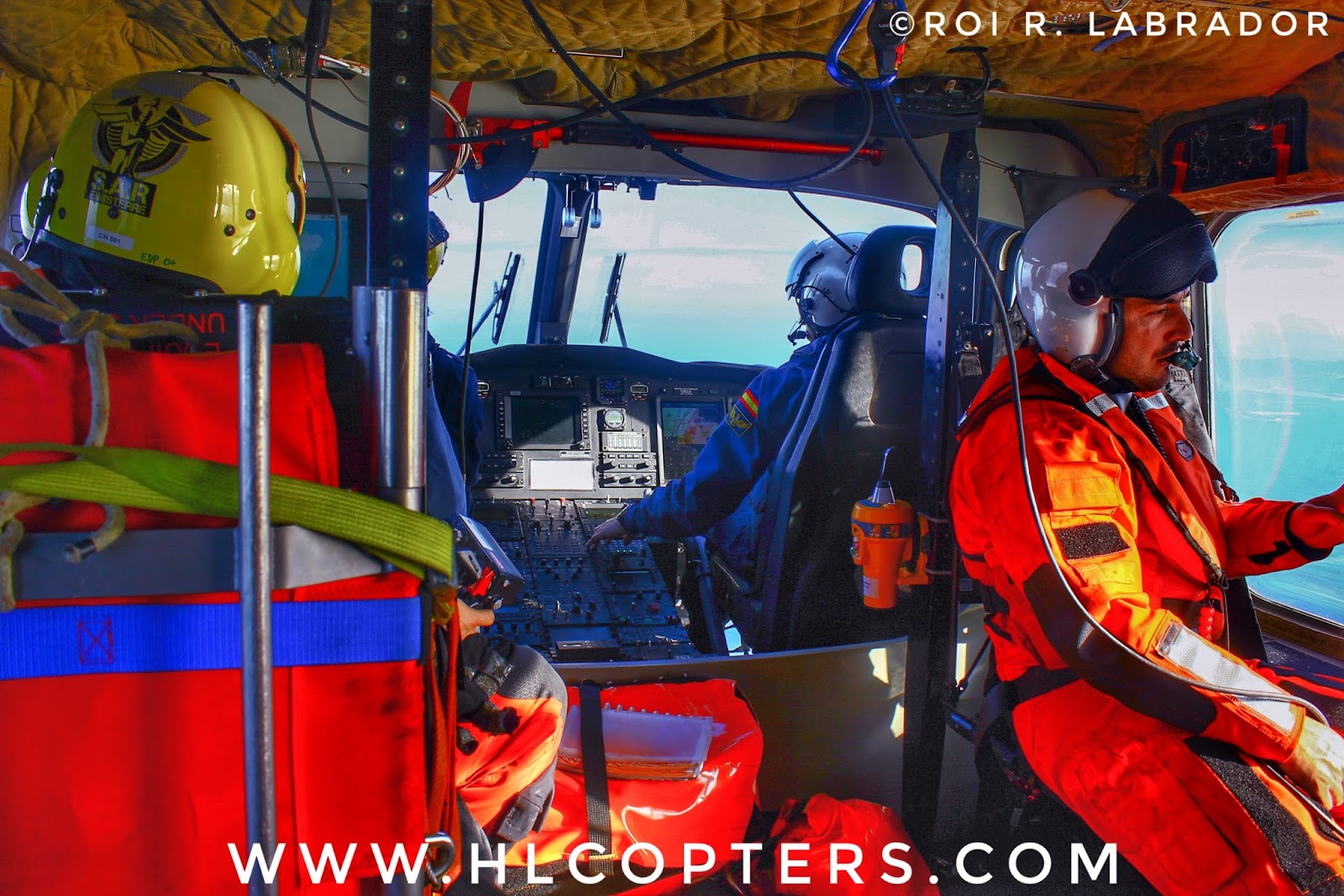
Los AW139 con SAR Modes son capaces de generar a través de su AFCS patrones de búsqueda, así como ejecutar una serie de transiciones automáticas.

Todos los Helimer de la Sociedad de Salvamento y Seguridad Marítima cuentan con Modos SAR acoplados a sus FMS.

Patrones  de búsqueda 

Los patrones de búsqueda prediseñados consisten en una serie de patas (rutas) que el helicóptero recorrerá dentro de un área geográfica. Ésta será indicada previamente a los pilotos desde el CCS que corresponda.

Ciertos patrones han de ser coordinados con embarcaciones, de manera que si entre ambos medios la organización es la correcta estos se cruzarán en los puntos intermedios marcados en cada sector del recorrido.

Los pilotos arman el patrón más adecuado para cada tipo de búsqueda (un solo náufrago o varios desperdigados, restos de un naufragio, balsas salvavidas, una embarcación de la que se ha perdido el rastro, etc) según estima, corrientes marinas y deriva del viento.

Para armarlos se introducen una serie de parámetros en el FMS del helicóptero como coordenadas de referencia, anchura de barrido, largo, altura y direcciones de búsqueda (entre otros), y se escoge el tipo de patrón (cuadrado expansivo, barrido paralelo, por sectores, etc); a partir de ahí la aeronave recorrerá las patas automáticamente a través del AFCS. 

Durante el transcurso de una búsqueda (con algún patrón armado), si la tripulación del helicóptero ve o cree que ha visto algo los pilotos pueden interrumpirla desde el cockpit únicamente pulsando el MOT (Mark On Target), de forma que el AFCS memoriza el punto exacto y la aeronave comenzará a realizar el tráfico SAR automáticamente para posicionarse sobre la zona con las mejores referencias visuales para el comandante; a 50 ft de altura, 50 ft atrás y 50 ft a la izquierda de la localización exacta sobre la cual se ha pulsado el MOT (estos parámetros estándar pueden ser modificados por los pilotos, por ejemplo actuando sobre el Beep Trim del colectivo). Por el contrario si es necesario continuar con el recorrido porque lo que se ha visto no tiene que ver con el objetivo de la misión, el AFCS memoriza asimismo el punto donde se ha pausado el patrón y hará regresar al helicóptero a su posición anterior para continuar con la misión.
El objetivo de los patrones de búsqueda es no dejar ni un solo sector del área por sobrevolar, realizarlos de forma manual exige una complicación que conlleva una elevada carga de trabajo en el cockpit y la imposibilidad de que los pilotos puedan ayudar al resto de la tripulación con la importante búsqueda visual.

Mas información: Hlcopters #5