domingo, 24 de febrero de 2019

Coast Guard searches aircraft crash site near Anahuac, Texas

USCG Air Station Houston MH-65 Dolphin, Photo: Petty Officer 3rd Class Jennifer A. Nease (archive)

HOUSTON​ — The Coast Guard is searching for three crewmembers of a plane that crashed in a marsh near Anahuac, Texas, Saturday afternoon.

Sector Houston-Galveston watchstanders received​ a call from the Federal Aviation Administration reporting that an Atlas Air Boeing 767 cargo plane with three crewmembers aboard had crashed.

An Air Station Houston MH-65 Dolphin aircrew was launched along with two Station Houston Response Boat-Medium boat crews to search the crash site.
Also involved in the search are:
  • Houston Police Department
  • Chambers County Sheriffs and Fire Department
  • Harris County Sheriffs Department
  • Texas Parks and Wildlife
  • Texas Department of Public Safety
  • Baytown Dive Team
-USCG-

sábado, 23 de febrero de 2019

USS Blue Ridge conduct passenger transfer with U.S. Coast Guard

EAST CHINA SEA (Feb. 23, 2019) - A U.S. Coast Guard helicopter lands on the flight deck of U.S. 7th Fleet flagship USS Blue Ridge (LCC 19) during a joint passenger swap training operation between the Coast Guard and Blue Ridge. Blue Ridge is the oldest operational ship in the Navy and, as 7th Fleet command ship, actively works to foster relationships with allies and partners in the Indo-Asia Pacific Region. (U.S. Navy photo by Mass Communication Specialist 2nd Class Adam K. Thomas).

-USCG-

Airbus: nuevas dimensiones para la construcción de satélites

Airbus pone en marcha el centro de tecnología espacial y de satélites más moderno de Europa


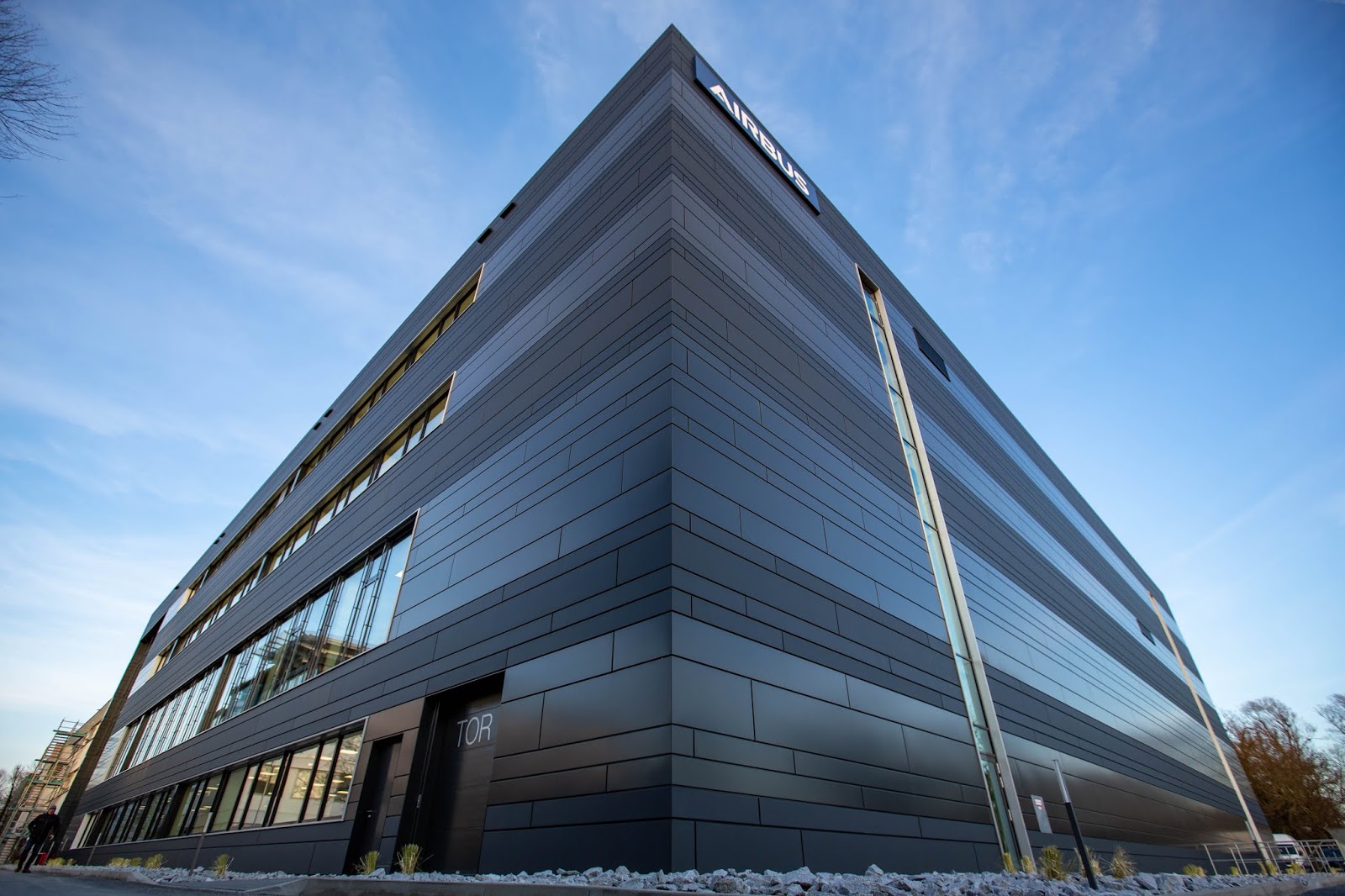
Friedrichshafen, 22 de febrero de 2019- La planta de Airbus en Friedrichshafen ha puesto oficialmente en marcha el centro de integración de satélites y tecnología espacial más moderno de Europa. El denominado Integrated Technology Centre (ITC) triplica la superficie dedicada a salas limpias para la construcción de satélites, sondas, instrumentos espaciales e instalaciones experimentales hasta los 4.200 m². La construcción de este centro altamente complejo ha supuesto una inversión de unos 45 millones de euros y se ha completado en tan solo dos años.

“La gran inversión de Airbus en este edificio es, a su vez, una inversión de futuro para la planta de Airbus a orillas del lago Constanza y para Baden-Württemberg como emplazamiento de centros dedicados al espacio. Desde Alemania vamos un paso por delante en el sector de la tecnología espacial, no sólo en cuanto a investigación, ciencia, desarrollo y tecnología, sino también debido a nuestro entusiasmo por el sector aeroespacial”, ha declarado Winfried Kretschmann, Presidente de la región de Baden-Württemberg. “Con este centro tecnológico, Airbus se adentra en una nueva era para desarrollar satélites aún mejores, que podrán desempeñar además misiones científicas. Los satélites son capaces de detectar con precisión los cambios en el nivel del mar e incluso registrar pequeñas fuentes de emisión de gases de efecto invernadero, por ejemplo. Gracias a estos satélites, se incrementa el conocimiento científico con el que poder hacer frente al cambio climático”.

“Las actividades espaciales han experimentado un desarrollo muy positivo en los últimos años. Además de las misiones científicas para explorar nuestro sistema solar y las principales leyes de la Física, como compañía dedicada al espacio deseamos responder a la demanda de satélites de observación de la Tierra, meteorológicos y de navegación en constante evolución, ofreciendo el más alto rendimiento y la mayor fiabilidad”, Nicolas Chamussy, Responsable de Space Systems en Airbus. “Gracias al nuevo centro dedicado a los satélites, la producción en la planta de Airbus en Friedrichshafen está posicionada de forma firme en cuanto a la calidad y al volumen que es capaz de ofrecer en comparación con nuestros competidores.”

El edificio ITC mide unos 70 x 60 metros, tiene una altura máxima de 18,50 metros y supone una ampliación de las actuales instalaciones de integración de satélites. El nuevo complejo “doble” permite desarrollar los proyectos de forma más eficiente y económica, ya que cuenta con la más moderna tecnología y ofrece “nuevas dimensiones” para asumir nuevos proyectos, como los grandes telescopios espaciales.

El corazón del ITC es la gran sala blanca. La integración final de los satélites tiene lugar en distintas condiciones de salas limpias –desde ISO 8 a ISO 5– en una superficie de unos 2.100 m², de los que 400 funcionan según los requisitos de la norma ISO 5. Los complejos sistemas de aire acondicionado y filtrado hacen circular un volumen de aire de 900.000 m³ hasta 60 veces por hora, lo que garantiza no sólo el ambiente limpio necesario, sino también el mantenimiento constante de una presión del aire más elevada, el control de la humedad y la temperatura. Cuatro bloques sísmicos, que pesan 150 toneladas cada uno, aíslan las mesas especiales de integración del propio edificio y garantizan un ambiente totalmente libre de vibraciones para el montaje de instrumentos ópticos. Un sistema de ventilación y filtrado controlado por ordenador situado en el lado sur de la sala limpia permite crear perfiles de flujo de aire diferentes para adaptarse al grado de ocupación de la sala. Este concepto consigue que se pueda disponer, por primera vez en Europa, de diferentes clases de salas limpias en un solo espacio sin requerir paredes o cortinas separadoras, que puedan entorpecer las tareas.

Desde las salas de supervisión que se encuentran directamente anexas, los empleados pueden controlar un gran número de funciones sin tener que entrar ellos mismos en la sala limpia. Todos los sistemas informáticos se alojan en sus propios bastidores, que cuentan con climatización y aislamiento acústico.

Las dos alas laterales del ITC albergan otros 1.100 m² con salas de integración y laboratorios para la fabricación de componentes, así como otras para trabajos técnicos. En la primera planta del ala oeste del edificio se encuentran un área de conferencias y una sala multifunción para demostraciones e información. Los grandes ventanales panorámicos permiten una vista única de la producción del hardware de vuelo.


En la actualidad se han trasladado al nuevo centro los primeros proyectos: cuatro satélites Sentinel para el programa europeo de medio ambiente y seguridad Copernicus, el satélite de observación de la Tierra europeo-japonés EarthCARE y dos antenas planares de radar de 12,30 metros de longitud cada una. Durante la primera mitad del año comenzarán la tarea de integración de JUICE, una misión a las lunas heladas de Júpiter que tiene previsto su lanzamiento a principios de 2022.

Coast Guard Cutter Robert Ward arrives in San Francisco Bay ahead of commissioning

The Coast Guard Cutter Robert Ward, a Sentinel Class Fast Response Cutter (FRC) homeported at Coast Guard Base Los Angeles-Long Beach, arrives in San Francisco, Feb. 22, 2019. The Robert Ward is the newest Coast Guard cutter to be stationed in California and will provide additional resources to the Coast Guard in emergency response, maritime smuggling, marine safety, environmental protection, search and rescue, and port security. (U.S. Coast Guard photo by Petty Officer 3rd Class Jordan Akiyama)

SAN FRANCISCO — The Coast Guard Cutter Robert Ward, the second California-based 154-foot Fast Response Cutter, arrived in the San Francisco Bay, Friday.

The Robert Ward is the second of four FRCs to be homeported at Base Los Angeles-Long Beach. While these ships will be based in Southern California, they will operate throughout the 11th Coast Guard District, which includes all of California and international waters off of Mexico and Central America.

"We are thrilled to welcome the Robert Ward and her crew to the Bay Area," said Capt. Tony Ceraolo, the Coast Guard Sector San Francisco commander and San Francisco Captain of the Port. "This new cutter brings a wealth of capabilities to the California coast, including search and rescue, law enforcement and drug interdiction. We're looking forward to commissioning the cutter right here in San Francisco next week."

FRC’s are 154-foot multi-mission ships designed to conduct: drug and migrant interdictions; ports, waterways and coastal security operations; fisheries and environmental protection patrols; national defense missions; and search and rescue.​ Each cutter is designed for a crew of 24, has a range of 2,500 miles and is equipped for patrols up to five days. The FRCs are part of the Coast Guard’s overall fleet modernization initiative.

FRCs feature advanced command, control, communications, computers, intelligence, surveillance and reconnaissance equipment as well as over-the-horizon response boat deployment capability and improved habitability for the crew. The ships can reach speeds of 28 knots and are equipped to coordinate operations with partner agencies and long-range Coast Guard assets such as the Coast Guard’s National Security Cutters.

FRCs are named in honor of Coast Guard enlisted leaders, trailblazers and heroes. The four California-based FRCs are:

Robert Ward (WPC-1130) – Ward operated beach-landing boats during the Normandy invasion. He landed his craft on the Cotentin Peninsula and rescued two stranded boat crews in the face of a heavily fortified enemy assault.

Forrest Rednour (WPC-1129) – Rednour aided in the rescue of 133 people during the sinking of the U.S.A.T. Dorchester, Feb. 3, 1943. He was awarded the Purple Heart and Navy and Marine Corps Medal for his actions. Rednour lost his life in the sinking of the Coast Guard Cutter Escanaba in June 1943.

Terrell Horne III (WPC-1131) – Horne was murdered by suspected drug smugglers who intentionally rammed the boat he and fellow Coast Guardsmen were aboard during law enforcement operations near Santa Cruz Island off the Southern California coast in December 2012. Horne pushed one of his shipmates out of the way of the oncoming vessel attack and sustained fatal injuries.

Benjamin Bottoms (WPC-1132) – Bottoms was part the Coast Guard aircrew that rescued an Army aircrew from a downed B-17 off the west coast of Greenland in 1942. Bottoms and the pilot conducted the first landing of a cutter plane on an icecap and commenced a two-day rescue over a rugged arctic terrain that required multiple flights. During the second day of rescue operations, radio contact with Bottoms’ plane was lost and he was declared missing in action.

The Coast Guard Cutter Robert Ward, a Sentinel Class Fast Response Cutter (FRC) homeported at Coast Guard Base Los Angeles-Long Beach, transits to Coast Guard Sector San Francisco on Yerba Buena Island, Feb. 22, 2019. The Robert Ward is the second and newest Fast Response Cutter to be stationed in California and will provide additional support to Coast Guard missions. (U.S. Coast Guard video by Petty Officer 3rd Class Jordan Akiyama)

-USCG-

viernes, 22 de febrero de 2019

The Brazilian Navy orders three multi-role H135s from Airbus

Marignane – The Brazilian Navy has ordered three H135 light twinengine helicopters to be operated by the 1st General Purpose Helicopter Squadron (HU-1). The aircraft will be dedicated to a wide range of missions such as special operations, transport of troops and freight, naval inspection, search and rescue and medical evacuation. Two of these aircraft will be equipped with aeromedical kits. Other equipment will include a cargo hook, an emergency flotation system, a winch, as well as weather radar.

The aircraft, which will replace the current light twin-engine AS355s, could also carry out missions in the frame of the Brazilian Antarctic Programme in the near future.
The contract includes a comprehensive HCare support and services package, which will guarantee the highest levels of availability for this fleet.
“We are extremely happy to sign this contract, which consolidates and extends the partnership we have had for over 40 years with the Brazilian Navy, our very first customer in the country,” said Richard Marelli, Helibras President and Airbus Head of Country in Brazil. “The H135’s low operating costs and excellent availability rate make it the ideal helicopter to fulfil the Navy’s challenging missions and needs.”
To date, more than 1,280 helicopters of the H135 family are in operation around the globe, having flown 4.9 million flight hours.

Coast Guard rescues man 170 miles west of St. Petersburg

A U.S. Coast Guard MH-60 Jayhawk helicopter crew from Air Station Clearwater, Florida, rescues a man from a 120-foot tug 170 miles west of St. Petersburg, Florida, Thursday, Feb. 21, 2019. The 57-year-old man was reportedly suffering from chest pains and was transferred to Tampa General Hospital in Tampa, Florida. (U.S. Coast Guard video)

ST. PETERSBURG, Fla. — The​ Coast Guard rescued​ a 57-year-old man Thursday 170 miles west of St. Petersburg.

Coast Guard Sector​ St. Petersburg command center watchstanders received a call via satellite phone at 1:24 p.m. from the master of the Mariya Moran, a 120-foot tug, stating a crew member was suffering from chest pains and was in need of medical attention.

A​ Coast Guard Air Station​ Clearwater​ MH-60​ Jayhawk helicopter​ crew and an HC-130 Hercules airplane crew launched to assist and arrived at 4 p.m.

The Jayhawk crew hoisted the man and transported him to​ Tampa General Hospital​ at 5:42 p.m.

“This case happened a long way from shore and thankfully they had a satellite phone aboard,” said Lt. j.g. Richard Laws, crew member at the Sector St. Petersburg command center. “They were professional mariners with the proper equipment aboard that allowed them to communicate the nature of distress to the Coast Guard.”

​ For more breaking news follow us on​ Twitter​ and Facebook.

-USCG-

jueves, 21 de febrero de 2019

Northrop Grumman Selected to Continue F-35 Program Mission Critical Work

CANBERRA, Australia – Feb. 22, 2019 – Northrop Grumman Australia, a fully owned subsidiary of Northrop Grumman Corporation (NYSE: NOC), welcomes the announcement of the assignment of maintenance, repair, overhaul and upgrade (MRO&U) work for the multinational F-35 Joint Strike Fighter (JSF) program to the Australian defence industry.

Photo courtesy of Lockheed Martin

Under this assignment announcement, Northrop Grumman Australia and fellow Australian companies, BAE Systems, MOOG, RUAG, NIOA, Survitec, and GE Aviation, will provide the capabilities underpinning thirteen of seventeen MRO&U component repair technology groups assigned to the Asia-Pacific region. These categories, assigned to Australian industry by the U.S. Department of Defense for the sustainment of F-35 Lightning IIs based in the Asia-Pacific region, include depot repair for avionics, munitions/weapons delivery, canopy systems, aircraft composite structure, electro-optical systems, electrical components, valves, auxiliary power systems, hydraulics, pneumatics, pneudraulics, hydro-mechanical systems, landing gear, life support and pumps.
“Northrop Grumman Australia continues to be fully committed to growing its in-country technical sustainment workforce and capabilities, and this work will allow us to continue supporting the Royal Australian Air Force’s (RAAF) mission and the Australian defence industry at large,” said Warren King, interim chief executive, Northrop Grumman Australia. “We are grateful to our industry teammates, the Australian JSF Division, the Commonwealth government, and the U.S. JPO for this recognition.”
Northrop Grumman’s capabilities related to F-35 are reinforced by the company’s support to the RAAF’s KC-30A Multi-Role Tanker Transport, Special Purpose Aircraft fleet and C-27J Spartan battlefield airlifter. With the sustainment and modernisation solutions we will offer for other mission-critical platforms such as the MQ-4C Triton, Northrop Grumman is well positioned to continue to drive strategic value creation in the MRO market.
Based on the assignment, Northrop Grumman Australia will deliver avionics, composites (teaming with Quickstep) and electro-optics repair (teaming with BAE Systems) services. In providing these services, the company will leverage its existing capabilities, as well as introduce new technologies to the Australian defence industrial community. To further support the execution of this assignment, Northrop Grumman Australia is establishing an Electronic Sustainment Centre (ESC) to sustain mission-readiness capabilities within the Commonwealth. After achieving readiness in January 2019 to support regional APN-241 radar repair, the ESC is prepared to support key fifth-generation communications, navigation, and identification systems.
“MRO&U components are one element of the F-35 global sustainment solution. As the U.S. and partner nations activate their F-35 fleets, Northrop Grumman and its industry team will continue to ensure critical systems are available for tasking and mission training,” said Steve Hogan, vice president, global sustainment and technology services supply chain, Northrop Grumman Technology Services.

Coast Guard Sector/Air Station Corpus Christi receives upgraded HC-144 in Texas

An HC-144B Ocean Sentry, Sector/Air Station Corpus Christi's newest addition, rests on an airstrip in Corpus Christi, Texas on Feb. 20, 2019. This upgraded aircraft contains improvements that will allow aircrews to gather and process surveillance information that can be transmitted to other platforms and units during flight. U.S. Coast Guard photo by Lt. j.g. Jessica Wright.

CORPUS CHRISTI, Texas — The Coast Guard received an upgraded HC-144 medium-range surveillance aircraft at Sector/Air Station Corpus Christi, Texas, Wednesday.

The bravo upgrade expands the HC-144’s extensive sensor capability, aiding the Coast Guard in its maritime patrol, drug and migrant interdiction, disaster response, and search and rescue missions.

The Coast Guard upgraded the HC-144 aircraft to improve mission effectiveness and situational awareness, as each newly modified aircraft features an updated cockpit control and display unit, navigation, and equipment monitoring systems.

The Coast Guard is also integrating the Navy’s Minotaur mission system architecture across its fixed-wing aircraft fleet. With the sophisticated command and control system, the aircraft incorporates surveillance and reconnaissance equipment to allow aircrews to gather and process surveillance information that can be transmitted to other platforms and units during flight.

“We are excited to usher in this new command and control suite to support the United States and our complex mission set,” said Capt. Edward Gaynor, Sector/Air Station Corpus Christi commanding officer. “Coast Guard Sector/Air Station Corpus Christi looks forward in working with our newly upgraded HC-144 fleet to better support our partners in South Texas.”

Coast Guard Sector/Air Station Corpus Christi personnel stand next to the Air Station's newest member, an HC-144B Ocean Sentry on Feb. 20, 2019 in Corpus Christi, Texas. This aircraft features an updated cockpit control and display unit, navigation and equipment monitoring systems. U.S. Coast Guard photo by Lt. Jake Conrad


-USCG-

Coast Guard, emergency services conduct 2 joint medical evacuations in 2 days throughout Main Hawaiian Islands.

A Coast Guard HC-130 Hercules aircrew delivers a 35-year-old man suffering from sepsis in Hilo, Hawaii, Feb. 20, 2019. The aircrew worked jointly with the Hawaii Disaster Medical Assist Team to medevac the man quickly to a higher level of medical care. (U.S. Coast Guard photo by Lt. Eric Ferree/Released)

HONOLULU — The Coast Guard conducted two joint medical evacuations in last two days throughout Main Hawaiian Islands. 

Wednesday, the Coast Guard and Hawaii Disaster Medical Assistance Team (DMAT) personnel conducted a medical transport of a 35-year-old man from Hilo, while Tuesday a Station Maui 45-foot Response Boat-Medium crew responded to a medical emergency off Molokini Crater.

In the Hilo case, an Air Station Barbers Point HC-130 Hercules aircrew and Hawaii DMAT medical personnel transported the man from the Big Island to Oahu to meet awaiting emergency services.

"We have a great team and work well with DMAT to serve the people of Hawaii,” said Lt. Eric Ferree, Hercules pilot. "The crew did a great job turning the aircraft around quickly; it went smoothly especially in the dark at 5 a.m.”

At 12:24 a.m., Wednesday, Joint Rescue Coordination Center Honolulu (JRCC) watchstanders received a request for assistance from the Hawaii Department of Health in transporting the man suffering from symptoms of sepsis to Oahu for medical treatment. JRCC conferred with the duty flight surgeon who recommended transport of the man as soon as possible.

According to Ferree, the search and rescue alarm went off at 3:45 a.m., the CG 1706 (Hercules) was configured and ready 30 minutes later. The DMAT team arrived on time at 4:30 a.m. As the crew was conducting engine runs before departing an issue with the #3 engine required a shift to the CG 1716. The team rapidly moved the medical pallet to the new plane, it was pre-flighted, and they were "off the deck at 6 a.m. on the dot”. ​ 

Upon landing in Hilo, the ambulance was waiting, and the patient boarded smoothly. DMAT personnel provided in-air medical care. Once the Hercules arrived at Oahu, the response teams transferred the patient to awaiting emergency services who then brought him to Straub Medical Center.

The Hawaii Healthcare Emergency Management’s Disaster Medical Team is a deployable, all-hazards disaster medical response and recovery team which is part of the medical surge capability within the HPP or Hospital Preparedness Program. All team members are volunteer professionals.

In the Maui case, the RB-M crew responded after Sector Honolulu watchstanders received a radio call from the master of the Maui Diamond II at 11:13 a.m. requesting medical assistance for a 76-year-old male diver. The diver was suffering from difficulty breathing after completing a second dive at Molokini Crater. The RB-M crew and Medic 15 personnel launched to assist. 

Once on scene, the RB-M crew transferred a medic and EMT to the Maui Diamond II where they determined the man was in stable condition. Medical personnel continued to treat him aboard the Maui Diamond II while the vessel transited to Maalaea Harbor with an RB-M escort. Upon arriving ashore, awaiting emergency services transferred the diver and took him to Maui Memorial Hospital.

The Coast Guard consistently works with emergency medical professionals throughout the islands to ensure access to an appropriate level of care as quickly as possible.

-USCG-

Coast Guard rescues 2 from disabled vessel 20 miles southwest of Bahamas

USCG MH-65 Dolphin Air Station Miami, photo by Petty Officer 2nd Class Christopher Parrinello (archive).

MIAMI — The Coast Guard rescued two people from a disabled vessel Wednesday approximately 20 miles southwest of Freeport, Bahamas.

At approximately 8:40 a.m., Coast Guard 7th District watchstanders received an emergency position indicating radio beacon alert from a vessel southwest of the Bahamas. Watchstanders launched a Coast Guard Air Station Miami MH-65 Dolphin helicopter crew and the Coast Guard Cutter Robert Yered to the scene to assist. The helicopter crew hoisted the two people from the sailing vessel Mavi, and will transfer them to Palm Beach International Airport.

"The possession and proper utilization of an EPIRB was crucial to the success of this rescue mission," said Lt. Patrick Leavitt, chief duty officer at Coast Guard 7th District.​ "We recommend​ all boaters have a registered EPIRB, and know where all their equipment is in case of an emergency."

For more breaking news follow us on​ Twitter.

USCG Cutter Robert Yered, Photo by Petty Officer 3rd Clases Mark Barney (archive).

-USCG-

miércoles, 20 de febrero de 2019

Heligo receives its first Airbus H145 helicopter from Milestone Aviation

Bengaluru, 20 February 2019: Milestone Aviation Group Limited (Milestone), a GECAS company and the global leader in helicopter leasing, and Airbus Helicopters announced today that Heligo Charters Private Limited (HCPL), a Mumbai-based non-scheduled helicopter operator has taken delivery of its first H145 helicopter. The helicopter’s configuration will allow it to perform a variety of missions. The aircraft taken on lease from Milestone will start operations soon in the state of Jharkhand.

“We take immense pride in the fact that Heligo has placed its trust in Milestone’s certainty of execution to deliver the aircraft, coupled with our financial and technical capabilities. We look forward to continuing to grow this long-term relationship,” said Michael York, Senior Vice President of Commercial at Milestone.
HCPL is a leading onshore and offshore helicopter services provider to the oil & gas industry, corporate and VIP travel in India.. The company currently operates 10 helicopters, including four Airbus AS365 N3 Dauphins.
“HCPL will use the versatile H145 helicopter for a variety of missions. With enhanced safety features and a reputation for reduced maintenance, the H145 is an ideal craft for performing diverse roles,” said Capt K Padmanabhan, CEO, Heligo Charters Pvt Ltd.
Airbus’ H145 is the latest member of its 4-tonne-class twin-engine rotorcraft product range – with designed-in mission capability and flexibility, especially in high and hot operating conditions. Compact in size, this helicopter’s small footprint and large, flexible cabin makes it the aircraft of choice for a variety of missions. It provides latest technologies, like the advanced cockpit design with the most modern Human Machine Interface (HMI) and state-of-the-art Helionix® avionics, more powerful engines, an enhanced transmission system and a Fenestron® anti torque-device.
These new technologies are combined with the rugged and proven design elements of the H145 - the main rotor system and the multipurpose cabin. Built-in safety aspects include an energy absorbing fuselage and seats and crash-resistant fuel cells. Compared to other helicopters in its class, the H145 offers a significantly larger cabin featuring excellent outside visibility for pilots, crew and passengers; a roomy cabin with no partitions, center or door posts; and unrivalled side and rear loading capability.
Airbus will be displaying a similar H145 at Aero India 2019 in Bengaluru from 20 - 24 February 2019.  

Coast Guard, partner agencies searching for missing swimmer off Tybee Island

USCG MH-65 Dolphin Air Station Savannah, U.S. Marine Corps photo by Sgt. Brittney Vella (archive)

CHARLESTON, S.C. — 
The Coast Guard ended its search Tuesday for a 33-year-old man who went missing off Tybee Island,​ Georgia.​

Coast Guard Air Station Savannah MH-65 Dolphin helicopter crew located a man in the water matching the missing swimmer's description at 11:40 a.m.

A Coast Guard Station Tybee Island 45-foot Response Boat – Medium​ boat crew recovered the man and began life-saving​ procedures​ while en route to Station Tybee where EMS was waiting.

On Monday, Coast Guard Sector Charleston Command Center watchstanders were notified by Tybee Island Fire and Rescue of a missing male swimmer at 6:38 p.m.​ The man was last seen by his wife swimming off Tybee Island in a wet suit on a body board.

Coast Guard Air Station Savannah crews, a Coast Guard Auxilary​ aircrew, Station Tybee boat crews, Tybee Island Fire and Rescue crews, Georgia Department of Natural Resourcesand local authorities assisted in the search.

For more breaking news follow us on​ Twitter.

-USCG-

martes, 19 de febrero de 2019

Coast Guard rescues 2 people and dog near Vermillion Bay

USCG MH-65 Dolphin Air Station New Orleans (archive).
NEW ORLEANS – The Coast Guard rescued two people and a dog near Southwest Pass, Vermillion Bay, Louisiana, Monday.

Coast Guard Sector New Orleans watchstanders received a report at 8:40 a.m. of an overdue 19-foot aluminum vessel with two people and a dog aboard who departed for a fishing trip yesterday between Vermillion Bay and Southwest Pass, Louisiana.

Watchstanders directed the launch of a Coast Guard Air Station New Orleans MH-65 Dolphin helicopter aircrew and a Coast Guard Aviation Training Center Mobile HC-144 Ocean Sentry aircrew. Louisiana Department of Wildlife and Fisheries, Iberia Parish and Vermillion Bay Sherriff’s Department also launched air and surface asset crews to search.

The Dolphin helicopter aircrew located the two people in a marsh area near the southwest point of Southwest Pass, Vermillion Bay, just west of Marsh Island at 4:23 p.m.

The Dolphin helicopter aircrew hoisted the two individuals and their dog at 4:23 p.m. and transported them to Acadiana Regional Airport.

The individuals were reported in good health.
HC-144 Ocean Sentry USCG Aviation Training Center Mobile ©Petty Officer 2nd Class Richard Brahm (archive).

-USCG-

Coast Guard medevacs man from fishing vessel Kari Marie 201 miles north of St. Paul, Alaska

A Coast Guard Air Station Kodiak MH-60 Jayhawk helicopter crew, forward-deployed to St. Paul, approaches the fishing vessel Kari Marie to medevac a man from it, approximately 201 miles north of St. Paul, Alaska, Feb. 18, 2019. Forward-operating locations follow the fishing fleet throughout the year to reduce response times for search and rescue cases when the call comes in. U.S. Coast Guard photo.

KODIAK, Alaska - A Coast Guard Air Station Kodiak MH-60 Jayhawk helicopter crew, forward-deployed to St. Paul, medevaced a man from the fishing vessel Kari Marie approximately 201 miles north of St. Paul, Alaska, Monday.

District 17 Command Center watchstanders received notification from the fishing vessel Pacific Mariner. They were relaying communications for the fishing vessel Kari Marie for a crew member that was reported to have suffered a compound fracture while aboard the vessel.

District personnel directed the launch of a MH-60 Jayhawk helicopter crew from Forward-Operating Location St. Paul to conduct the medevac. They also diverted an Air Station Kodiak HC-130 Hercules aircrew to provide communication coverage for the case.

The man was transported to local emergency medical services personnel in St. Paul and was reported to have been in stable condition.

“Being forward-deployed in St. Paul allowed us to significantly reduce the response time to assist this mariner,” said Lt. Kevin Riley, the aircraft commander for this case.“We hope he makes a rapid and full recovery.”

On-scene weather was 4-foot seas, overcast skies, and an air temperature of 34 degrees with calm winds.

-USCG-